Home Page
Templates in Screendragon
TABLE OF CONTENTS
The Screendragon Template Builder is a powerful tool for creating and managing templates that streamline project creation. Templates define all project elements, ensuring consistency and efficiency throughout the project setup process.
Purpose of Templates
Templates serve as predefined structures that specify various aspects of a project, making it easier for end users to initiate new projects with standard settings.
Key Features of the Template Builder
- Administrative Access: The Template Builder is accessible to admin users, who have the authority to create and manage templates used by end users to develop projects.
- Customizable Modules, Phases, and Meta: Admin users can define which Modules, Phases, and Meta elements are displayed in the templates. This customization enables tailored project setups that cater to the specific needs of various projects or teams.
- Permissions Management: Within the Template Builder, admin users can assign predefined Permissions to specific users or groups. This ensures that only authorized individuals can access certain project features or information.
- Pre-populated Project Data: The Template Builder also enables the management of pre-populated project data. Admin users can configure templates to include predefined tasks and folder structures, facilitating quicker project setup for end users.
Accessing the Template Builder
To access the Template Builder, follow these steps:
- From the main menu, navigate to the Administrator Tools.

- Click the Template Builder.

- In the Template Builder interface, click Create New Layout.

- Give the template a name and description.

- Click the desired module to add it to the template. Click here for details on each module.

- You can add as many Modules as you need for the template.

- Navigate to the Phases tab. (Adding at least one phase to the template is required.)

- Give the phase a title and, if desired, a description. Click here for more information on phases.

- Navigate to the Meta tab.

- Select a form for the meta elements you want included in the template. The Meta Tab in Screendragon’s template builder allows administrators to define and control key metadata for a template. Metadata links the template to forms, determines what information appears in automated email notifications, and specifies resource allocations. This ensures consistency, accuracy, and efficiency across projects that are created from the template. Click here for more information on the Meta Tab.

Show Advanced
In the Screendragon Template Builder, enabling Show Advanced reveals two additional tabs: Configuration and Status. 
Configuration
The Configuration tab provides advanced controls for how the template is displayed and interacted with when creating or editing projects.
This tab is designed for administrators who need to customize the end-user experience, streamline form inputs, and enforce consistency across projects. By configuring these options, admins can determine which fields are visible, how data is presented, and what level of detail users see when working with project forms.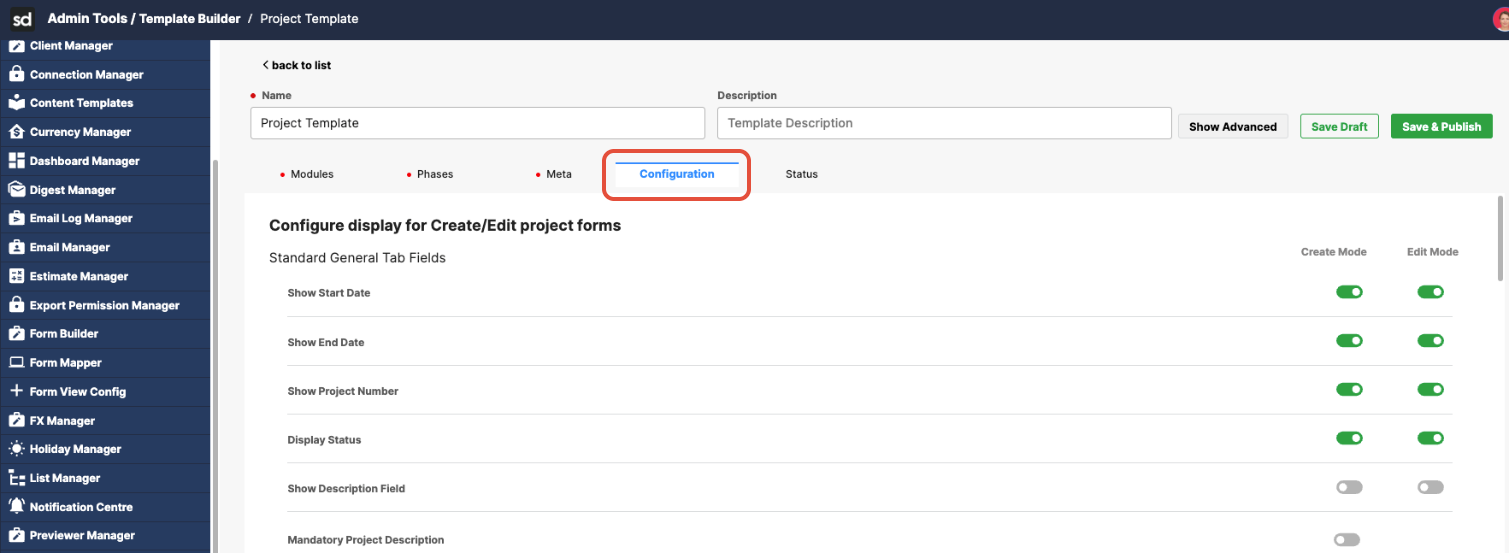
Status
The Status tab enables administrators to define the lifecycle stages (statuses) that a project can progress through once it is created. These statuses form the backbone of project tracking, reporting, and workflow automation.
By setting up statuses in the template, administrators ensure that every project created from that template follows a consistent progression, providing both users and stakeholders with clear visibility into the project's current status at all times.
Conclusion
The Screendragon Template Builder is essential for streamlining project creation and ensuring consistency across projects. By leveraging its features, admin users can enhance productivity and maintain control over project structures and permissions. For further assistance or inquiries, please get in touch with the support team.
Was this article helpful?
That’s Great!
Thank you for your feedback
Sorry! We couldn't be helpful
Thank you for your feedback
Feedback sent
We appreciate your effort and will try to fix the article